Brand refresh or rebrand: define what needs to change
Compare the work behind a refresh and a rebrand. Use a keep, change, or investigate worksheet to define the decisions, evidence, and rollout your brand needs.
 Words by Spring Studio
TL;DR
- Define the problem and the evidence before choosing a refresh or rebrand label.
- Decide what to keep, change, or investigate without treating assumptions as customer research.
- Give each change an owner and a rollout dependency across the materials it affects.
A brand refresh develops an existing identity. A rebrand revisits more of the brand’s foundations and how they are expressed. The scope can overlap: a refresh may include messaging, and a rebrand does not have to replace every asset or the company name.
The useful decision is what needs to change and why. Before choosing a label, separate what you know about the problem from what your team suspects. Then decide which parts of the brand to keep, change, or investigate.
Name the problem before choosing the label
Start with a specific concern you can discuss. “Our sales decks and website use different type styles” points to inconsistent execution. “Our website describes an audience we no longer intend to focus on” raises a question about the underlying story. “Buyers do not trust our identity” is a hypothesis until you have evidence to understand it.
Positioning means who your offer serves and why they would choose it. If the team cannot agree on that, choosing a new color palette will leave an important question unresolved. If the story is already clear but its expression varies across materials, the first task may be to improve the existing system and its use.
Write the concern, where it appears, and what information supports it. A business decision, a documented customer question, and a colleague’s visual preference can all inform the discussion, but they answer different questions. Keep those sources visible when agreeing the work.
Compare the areas of work
Use these as working descriptions rather than fixed project categories. The proposal should say what the team will examine and deliver. Keeping a logo does not make a project a refresh by itself, just as changing a name does not describe everything a rebrand involves.
Swipe or scroll to compare the columns.
| Area | A refresh may involve | A rebrand may involve |
|---|---|---|
| Audience and offer | Checking that the existing direction still fits the assignment | Revisiting whom the offer serves and the basis for choosing it |
| Message | Clarifying language and applying the existing story more consistently | Developing a revised story around an agreed business direction |
| Visual identity | Refining typography, color, layout, or other existing elements | Developing the visual system around the revised direction, retaining useful elements where appropriate |
| Application and rollout | Updating selected materials and making the system easier to use | Planning how the agreed identity reaches relevant touchpoints, possibly in phases |
Neither label settles the size of the rollout. Updating a widely used type system can affect many templates. Revisiting a core message may leave some visual assets intact. Discuss the decisions and affected materials before estimating the work.
Work through a keep, change, or investigate worksheet
Consider a fictional B2B analytics company. Its website and sales deck use inconsistent typography. An internal plan proposes reaching finance teams, while the homepage still speaks only to marketing teams. The team wants to retain its current name.
Each worksheet entry connects an element to its evidence, an action, an owner, and a dependency. A missing answer can become a piece of work to investigate rather than a reason to choose a new identity immediately.
Keep: the existing name, provisionally
Element: Existing company name. Observed issue: The team wants continuity while it considers a wider audience. Evidence/source: The fictional leadership planning note records the preference to retain the name. Known vs assumed: The preference is known within this example; whether the name fits the proposed audience is unresolved. Proposed action: Keep it in the current working materials while investigating the audience and message. Reason: There is not yet an agreed reason to replace it. Decision owner: The leadership sponsor. Rollout dependency: Revisit the decision if the audience and positioning work identifies a relevant concern.
Change: inconsistent typography
Element: Typography across the website and sales deck. Observed issue: Those materials use different heading styles. Evidence/source: A side-by-side inventory of the fictional current materials. Known vs assumed: The inconsistency is visible; its effect on buyers has not been established. Proposed action: Agree one type system and apply it consistently. Reason: Give the team a clear rule for producing connected materials. Decision owner: The brand lead, with the designer’s recommendation. Rollout dependency: Approve the type rules and test representative layouts before updating shared templates.
Investigate: the audience and message
Element: Audience and homepage message. Observed issue: The current language addresses marketing teams; the internal plan proposes reaching finance teams. Evidence/source: The fictional homepage copy and internal product plan. Known vs assumed: The mismatch between those documents is known; what finance buyers need and whether the offer fits them remain open. Proposed action: Investigate the intended audience and offer before approving new positioning. Reason: The team needs a basis for the message beyond an internal preference. Decision owner: The marketing lead with product and leadership input. Rollout dependency: Agree the direction before rewriting the website and sales story.
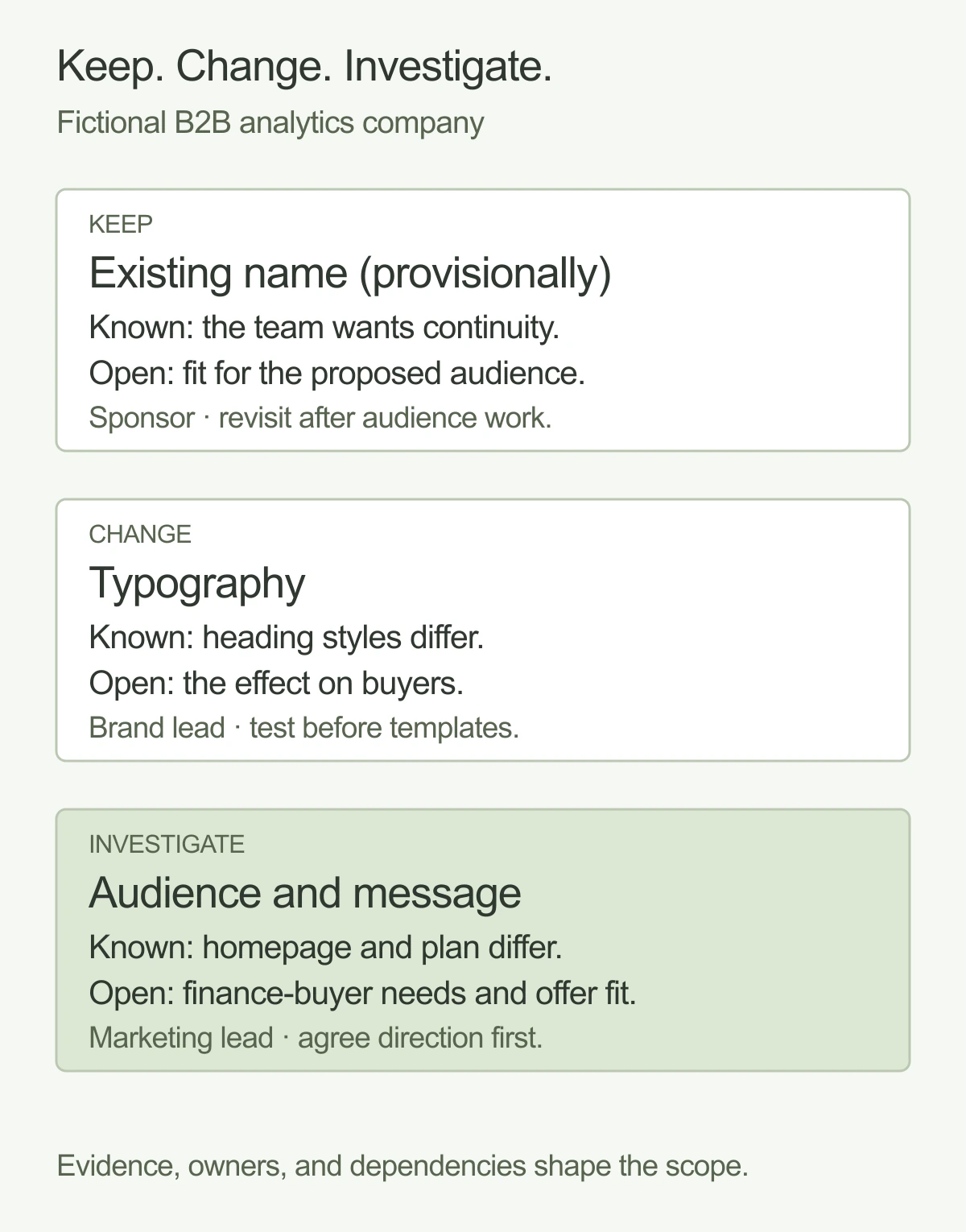
This example supports a typography update and further investigation of the message. It does not yet establish the full brand scope. The inquiry may support the existing direction, identify a need for clearer language, or lead the team to revisit more of the foundations. Record that next decision rather than treating the worksheet as an automatic recommendation.
Copy the worksheet
Brand scope worksheet
Element: ____________________
Observed issue: ____________________
Evidence/source: ____________________
Known vs assumed: ____________________
Proposed action (keep / change / investigate): ____________________
Reason: ____________________
Decision owner: ____________________
Rollout dependency: ____________________
Download the brand worksheet (.txt)
Gather the inputs that can inform the decision
Collect the current identity guidance and a representative set of materials: website pages, product screens, decks, campaigns, and internal templates. Note which are current and who maintains them. A useful inventory shows the decisions the team actually needs to make, rather than only the most polished examples.
Bring the approved business direction and any documented customer questions that are available. Identify constraints, such as elements the team wants to retain, and distinguish preferences from decisions that are already settled. Name who can make the final scope decision and whose input they need.
If important buyer questions remain unanswered, agree an appropriate way to investigate them. That could include reviewing existing feedback or planning conversations with relevant customers. Treat this as future work to define, not research that has already happened. For the wider assignment, use a creative brief to record the audience, responsibilities, deliverables, and open questions.
Plan where each change needs to appear
Turn each agreed change into a list of affected touchpoints. For the fictional typography update, start with representative website pages and a sales-deck layout. Use them to check the type rules, then update the shared website styles, deck master, and campaign templates in an agreed order.
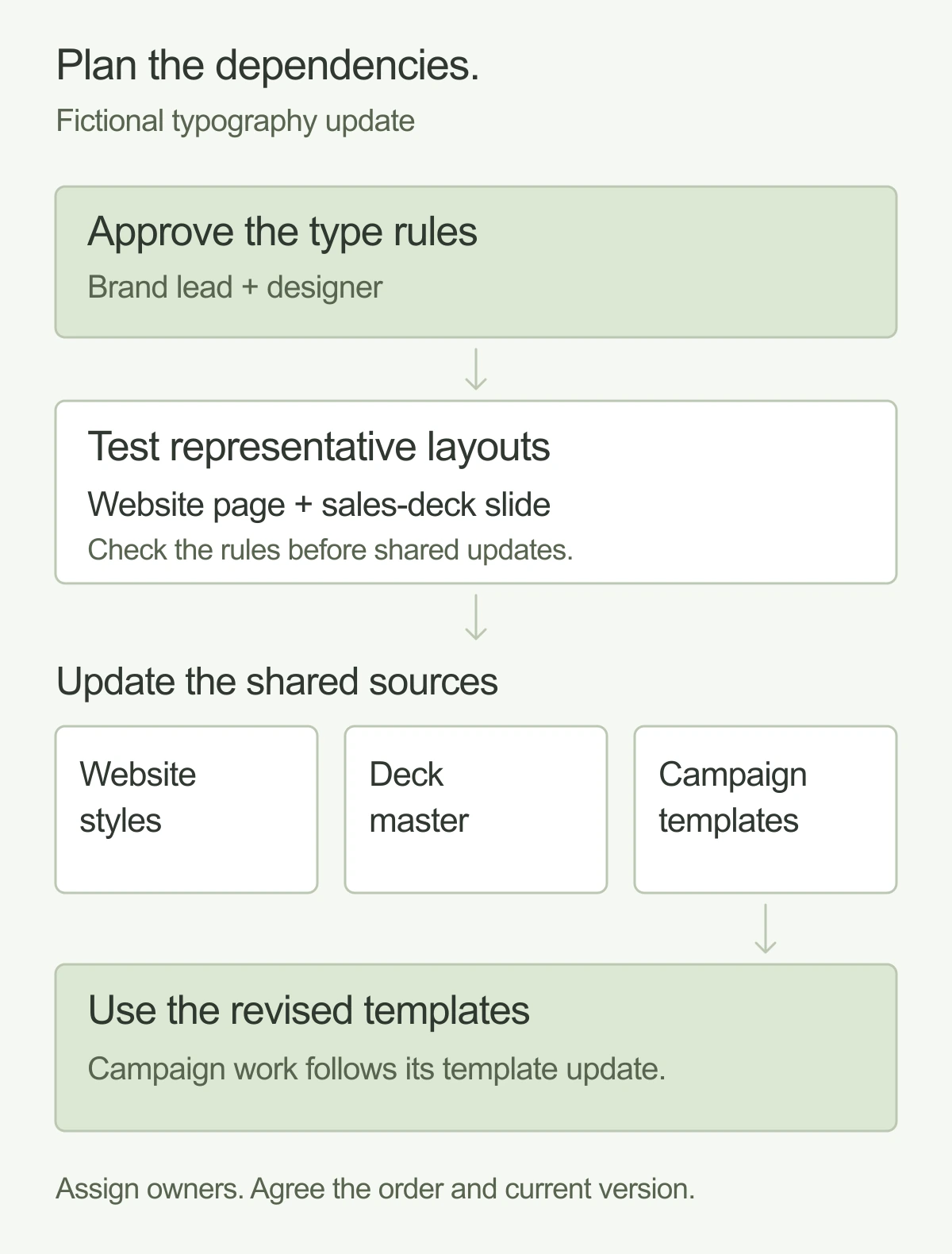
Name an owner for each application and the decision it depends on. The website team may need approved type rules before updating styles; the people making campaigns need the revised template before producing the next set. Record where old and new materials may overlap during a phased rollout, and how the team will identify the current version.
A revised message can create a different set of dependencies. Agree the audience and offer before rewriting page content or giving sales a new story. If the work becomes a website redesign, the redesign readiness guide can help plan the content, structure, and ownership that follow.
Bring a concrete scope to the design conversation
Bring the concern, the evidence available, what you want to retain, the decisions still open, and the places the work must reach. Ask the design team to explain which parts need development and which need investigation before execution begins.
A useful scope names the work rather than relying on “refresh” or “rebrand” to mean the same thing to everyone. Explore Spring’s brand identity services to plan the identity work alongside your team.
And good people.Meet Spring