A creative brief your marketing team can actually use
A practical one-page template, a fictional B2B launch example, and a review loop that keeps context from getting lost.
 Words by Spring Studio
TL;DR
- Keep lasting company context separate from the details of each new request.
- Name the audience, intended action, main message, deliverables, constraints, and approver.
- Use the same brief to review the work and record what should carry into the next request.
A useful creative brief tells the team who the work is for, what it should help them understand or do, what needs to be made, and who will approve it. It can be short. It needs enough context for someone outside the meeting to make a sound decision.
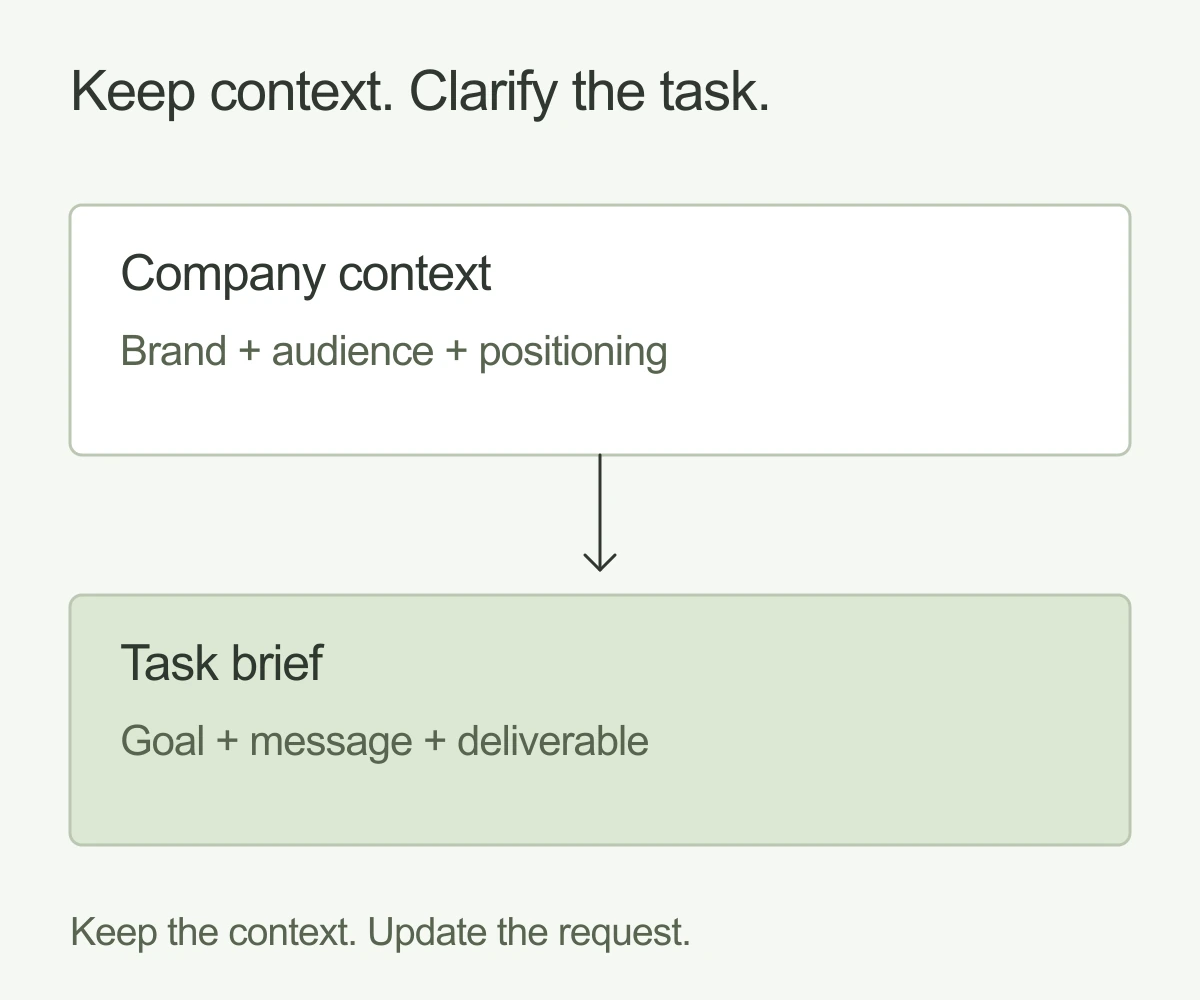
For recurring marketing work, keep the company background in a shared reference and give each request its own brief. That way you do not rewrite the whole brand story for every asset, and the details of a new request do not disappear inside a long reference document.
Separate company context from the task
Your company context is the information that should carry across requests: the audience, offer, product language, brand guidelines, approved examples, and claims you can support. Keep the current version in one place, with an owner and a clear date.
The task brief explains what is different this time. It names the campaign goal, audience segment, message, deliverables, constraints, review points, and decision-maker. Link to the shared context rather than pasting a competing version of it into every request.
This distinction is a practical organizing method, not a required industry format. Aha!’s guide to creative briefs is useful background on adapting a brief to the work. The template here is our own starting point for recurring marketing requests.
The eight questions the brief should answer
- Goal: What needs to be different when this work is used?
- Audience: Who is it for, and what question or problem do they bring?
- Action: What should that person do next?
- Message and proof: What is the main idea, and which claims or examples support it?
- Deliverables: What needs to be made, in which channels, formats, and quantities?
- Constraints: What is fixed, what is flexible, and what dependencies could block the work?
- Review: Who gathers feedback, who approves, and when do they need to decide?
- Acceptance: What will both sides check before calling the work ready?
Use specifics where they change the work. “For marketing leaders comparing an ongoing design partner” is more useful than “for businesses.” “Help readers book a short conversation after understanding the offer” is more useful than “make it engaging.”
A vague request, rewritten
The example below is fictional. Northstar Flow is an invented B2B software company; this is not a client story, a product claim, or evidence of campaign results.
Vague request: “We need a landing page and a few social posts for our new feature. Make it feel premium. We want it live soon.”
That leaves the team guessing about the audience, message, scope, and finish. A clearer version might read:
Swipe or scroll to compare the columns.
| Field | Example |
|---|---|
| Goal and audience | Introduce a new approval-routing feature to operations managers who currently chase decisions across separate message threads. |
| Main message | Show how an approval request moves from one owner to the next. Use the approved product description and current product screenshots. |
| Desired action | Invite interested readers to request a product demo. |
| Deliverables | One landing page design using the current site components, plus three LinkedIn image adaptations. Copy and development are separate responsibilities to confirm. |
| Constraints and inputs | The marketing lead supplies approved copy, screenshots, brand files, and supported claims before design starts. No unverified time-saving promise. |
| Review and approval | One marketing lead gathers product and sales feedback, resolves conflicts, and approves the work. Agree review and handover dates before committing to launch. |
| Ready means | Message matches the approved feature description; the design and proposed link destinations are reviewed; required image sizes and source files are handed over. |
The better brief leaves room for creative judgment. It explains the problem and the limits without prescribing every layout choice. If “premium” matters, add a reference and explain what is useful about it: the pace, typography, restraint, or clarity.
Copy the one-page template
Use this for the next real request. Replace the bracketed prompts, remove fields that do not apply, and link to the files the team can actually access. If something is undecided, name the person who will decide it.
One-page creative brief
PROJECT / REQUEST
[Name the work and its owner.]

SHARED CONTEXT
[Link to the current audience, offer, brand, and approved-claims reference.]

GOAL
[What should be different when this work is used?]

AUDIENCE + NEXT ACTION
[Who is it for? What do they need? What should they do next?]

MAIN MESSAGE + PROOF
[One central idea. Links to approved claims, examples, or evidence.]

DELIVERABLES + DESTINATIONS
[Exact assets, quantities, channels, formats, and handover files.]

CONSTRAINTS + INPUTS
[Fixed dates, budget or scope limits, supplied copy/assets, dependencies, and who owns them.]

REVIEW + APPROVAL
[One feedback owner, contributors, final approver, and agreed review dates.]

READY MEANS
[The checks that make the work complete.]

OPEN QUESTIONS
[What is still undecided, who decides, and by when?]
Download the brief template (.txt)
Give feedback against the brief
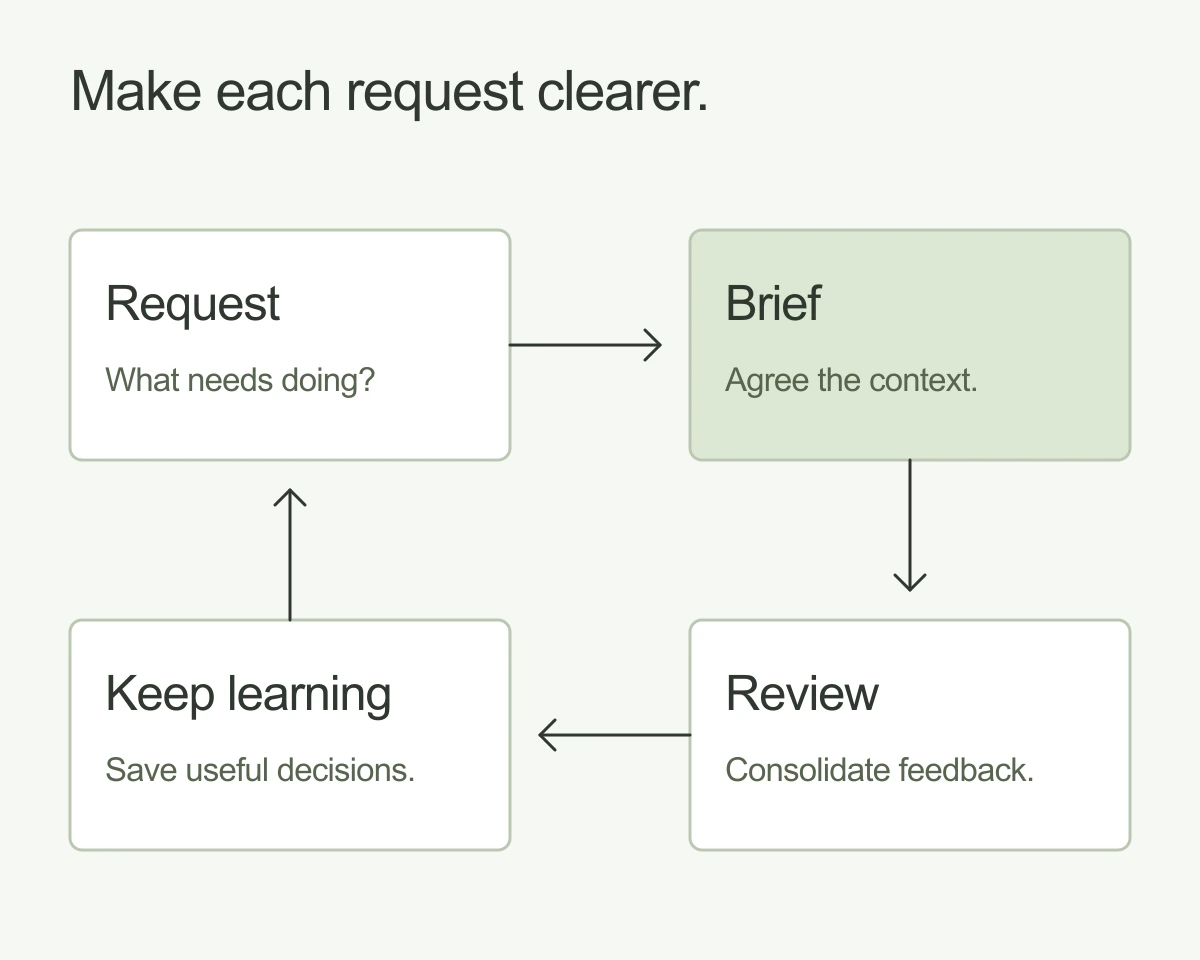
Start each review by saying what decision is needed. A first direction asks whether the idea answers the brief. A production review asks whether the agreed idea has been carried through correctly. Mixing those conversations can reopen decisions the team thought were settled.
Gather comments in one place and resolve conflicting instructions before sending them back. Describe the problem you notice and why it matters. “The main action is hard to find on a phone” is a clearer problem than “make the button bigger.” The designer can then choose how to solve it.
Check the work against the agreed checks in the brief before approval. Confirm the message, required formats, links, content, and files. A brief is useful at the finish as well as the start.
Update the brief when the work changes
A new audience, channel, deliverable, or approval group can change the job. Record what changed and ask what it affects before adding it to the work. If a landing page brief grows into a full website rebuild, pause and scope that decision.
Keep a short decision log: what changed, why, who approved it, and what should be reused next time. This is how a recurring team can build knowledge instead of treating every request as a new introduction.
If the queue now includes a large launch, use design retainer versus fixed project to separate ongoing work from a defined project. If ownership inside the company is unclear, read embedded creative team versus in-house hire.
Start with the next request
A brief does not need to answer every question in advance. It should make the important questions visible and give each one an owner. Use the template for one request, review what the team still had to ask, and improve the shared context from there.
If your marketing team needs a continuing creative partner, explore ongoing creative support at Spring. We can talk through a real request and agree what the team would need to get started.
And good people.Meet Spring