
A design retainer or a fixed project?
Choose the way of working that fits the brief: a recurring queue, a defined launch, or a clearly scoped mix of both.
 Words by Spring Studio
TL;DR
- A retainer can fit recurring creative work whose priorities change over time.
- A fixed project can fit a defined outcome with agreed deliverables, reviews, and a finish.
- A launch can need both, but its scope and capacity need to be planned separately.
A design retainer is an ongoing agreement for creative support, with scope, capacity, and fees agreed in advance. A fixed project covers a defined body of work with an agreed finish. A design retainer can make sense when your team has a recurring queue of creative work. A fixed project can make sense when you can define the outcome, deliverables, and finish before starting. The useful question is how the work behaves—not which pricing format sounds simpler.
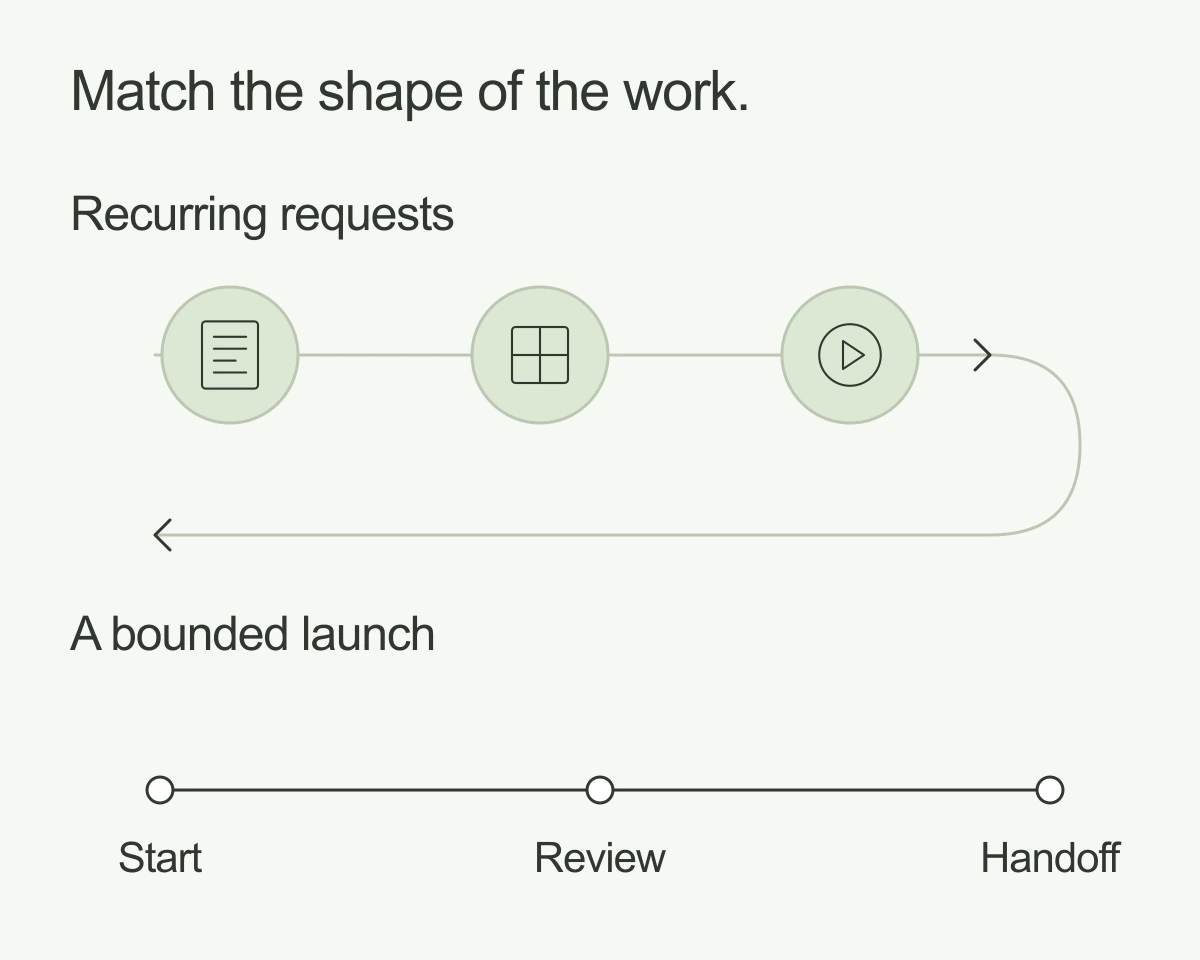
Use the next few months of actual requests to make the choice. A steady mix of campaign assets and website updates is different from rebuilding a website around one launch date. Some teams need both, with a clear boundary between them.
Use a retainer for a recurring queue
Ongoing work rarely arrives in a neat order. A sales presentation moves up, an event needs materials, and a landing page needs to change after a product update. A retainer can give that work a continuing team and a shared place to set priorities.
The queue still needs an owner. Someone inside your company should decide what matters next, supply the right context, and gather feedback. The creative team should explain what is active, what is waiting, and what needs a decision before it can move.
At Spring, the monthly model covers one active priority at a time. That is a capacity boundary, not a promise that every request has the same turnaround. A presentation, an illustration system, and a website build ask for different amounts of work. Confirm the plan against your actual queue.
Use a fixed project for a defined finish
A fixed project starts with an agreed outcome and a scope of work. A brand identity, website rebuild, or launch film may fit this approach when the team can agree on what is included, how it will be reviewed, and what makes it ready for handover.
A useful scope names the deliverables, required formats, review stages, and responsibilities on both sides. It should also name the assumptions: who supplies copy, whether development is included, which integrations are expected, and what happens if a requirement changes.
The Association for Project Management’s explanation of scope management is useful background: scope covers what the project will and will not deliver. The decision framework below applies that distinction to creative work.
Compare how the work will be managed
Swipe or scroll to compare the columns.
| Question | Monthly retainer | Fixed project |
|---|---|---|
| What is planned? | A continuing stream of requests within an agreed service and capacity. | A defined outcome, deliverables, milestones, and handover. |
| How do priorities change? | An internal owner reorders the queue with the delivery team. | A change is assessed against scope, timing, and cost before approval. |
| How is progress reviewed? | Through the active priority and the next requests in the queue. | At agreed stages such as direction, design, production, and handover. |
| What needs a boundary? | Active work, scope, revisions, outside costs, and ongoing terms. | Deliverables, assumptions, review rounds, dependencies, and changes. |
| What does completion mean? | The current request meets its agreed checks for when the work is ready. | The agreed project scope is reviewed and handed over. |
Three example workloads
These are fictional planning examples, not client projects, quotes, or delivery commitments. Use them to test how you would organize your own work.
Swipe or scroll to compare the columns.
| Example | A sensible starting point | What to clarify |
|---|---|---|
| A marketing team needs recurring presentations, campaign assets, and small website updates. | Explore a retainer. | Which requests repeat, which priority is active, and who approves changes? |
| A company needs a new marketing website for an agreed launch. | Scope a fixed project. | Page list, content ownership, development, integrations, review dates, and launch responsibilities. |
| A team has ongoing campaign work plus a major brand launch. | Plan ongoing support and a separate launch scope. | What stays in the queue, what becomes the project, and who has capacity for each? |
If a workload changes halfway through the discussion, that is useful information. For example, a “small website update” may become a new page system, revised messaging, and a CMS rebuild. Scope that work honestly before deciding where it belongs.
A launch can need both
A fixed launch project may create the identity, website, or core campaign. A retainer may then support agreed adaptations and ongoing updates. The order can also work the other way: a recurring team may help define a brief that becomes a separate project.
Keep the capacity and responsibilities visible. Do not assume a large launch can be added to a full queue without changing anything. Agree which work pauses, which work gets a separate team, and which dates depend on decisions from your company.
This is also where the staffing question is different from the engagement question. If you are deciding who should own creative inside the business, use our guide to an embedded creative team versus an in-house hire.
Agree on changes before they become surprises
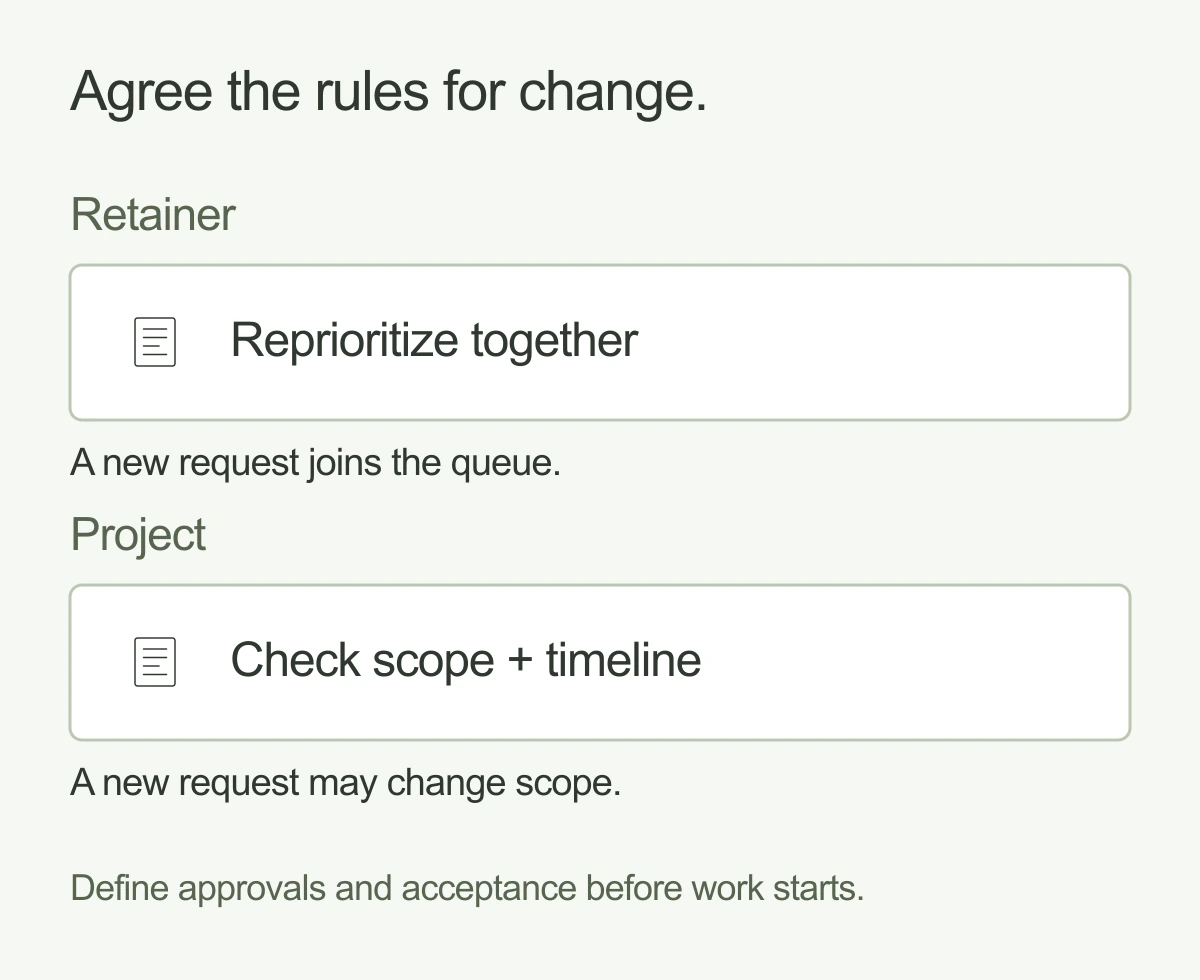
For a retainer, ask how new requests enter the queue and how the team handles a blocked priority. For a fixed project, ask how new requirements are assessed and approved. In either case, a written decision is clearer than an assumption buried in a message thread.
A useful change note is short: what is new, why it is needed, what it affects, and who approves the tradeoff. It may affect the deliverables, order of work, budget, or timeline. Sometimes the right decision is to replace an earlier request rather than add another one.
For example, if an agreed launch film now needs several language versions, new voice recordings, and different channel edits, check those requirements against the original scope. Do not treat every change as either automatically included or automatically refused.
Ask these questions before committing
- What is included, and which work needs a separate agreement?
- How many priorities can be active, and who chooses their order?
- Who supplies copy, brand assets, technical access, and approvals?
- How do reviews, revisions, and changes to scope work?
- Which licenses, platform costs, files, and usage rights are included?
- What are the actual payment, renewal, pause, and cancellation terms?
- How will both sides decide that a request or project is ready?
Make the choice from a real brief
Write down your next requests, their dependencies, and the person who approves them. If the work has one defined outcome and finish, start with a project scope. If it is a continuing queue, compare ongoing support. If it contains both, plan the two parts openly.
Use our creative brief template to make that discussion concrete. Then explore ongoing creative support or website design as relevant. Current fees and commercial terms belong on the pricing page, rather than in an article that may outlive an offer.
If you want help sorting the workload, talk through the brief with Spring. Bring the requests and the constraints; we can work out which model fits them.
And good people.Meet Spring